World's largest RCT on children’s wellbeing
Children’s wellbeing is critical to learning, yet much of the field lacks rigorous evidence.
To address this gap, Labhya partnered with J-PAL to conduct the world’s largest randomized controlled trial on children’s wellbeing, tested under government delivery, to identify what works at scale within public school systems.
Why this study?
To generate causal evidence on whether daily wellbeing classes, delivered by public school teachers at scale, can improve children’s wellbeing and learning outcomes. Also, to understand the tradeoff of whether it takes away from learning time.
Why this study?
To generate causal evidence on whether daily wellbeing classes, delivered by public school teachers at scale, can improve children’s wellbeing and learning outcomes. Also, to understand the tradeoff of whether it takes away from learning time.
Study at a glance
2
years
Randomized
controlled trial

30,000+
children
Public school
teacher-led delivery

Standardized
tools

External
evaluator
Evidence from the world’s largest randomized controlled trial on children’s wellbeing
Children became less anxious, more focused, and ready to learn, leading to
stronger critical thinking and learning gains.
Mental health
& wellbeing

We measured children’s anxiety across 2 years:
- For children with a clinically high level of anxiety, it decreased by 21% (-0.30 SD)
- For girls, anxiety decreased by 9% (-0.12 SD)
- These reductions were achieved through routine classroom instruction, without specialist delivery
- Children are calmer
Critical thinking

We measured children’s cognitive ability & critical thinking across 2 years:
- We saw across all children a +0.15 SD increase in cognitive skill and critical thinking equivalent to an increase of 2.25 IQ points
- In some subgroups, we see gains as high as +0.23 SD, equivalent to an increase of 3.5 IQ points
- Improved critical thinking paves the way for driving long-term learning and classroom readiness
- Children are focused
Academic learning

We measured numeracy and literacy outcomes across 2 years:
- We saw across all children, math learning (Numeracy) increased by +0.25 SD (~15 months of additional learning in LAYS)
- Some subgroups showed learning gains as high as +0.33 SD (~20 months of additional learning in LAYS)
- Some subgroups showed Local Language Literacy gains as high as +0.22 SD (~12 months of additional learning in LAYS)
- Children are learning

Impact on girls
Girls show strong gains across outcomes, with larger effects among those starting furthest behind. Over two years, we saw across all girls:
- 9% decrease in anxiety for all girls (-0.12 SD, sustained over 2 years)
- Cognitive skills increased by +0.13 SD, equivalent to 2 IQ points
- Math learning (Numeracy) increased by +0.22 SD (~13 months of additional learning in LAYS)
Consistent gains were observed for girls, children in rural settings, and children facing structural disadvantages, thus improving outcomes most strongly for children who began with greater barriers to learning and wellbeing.

Can the program be delivered at scale?
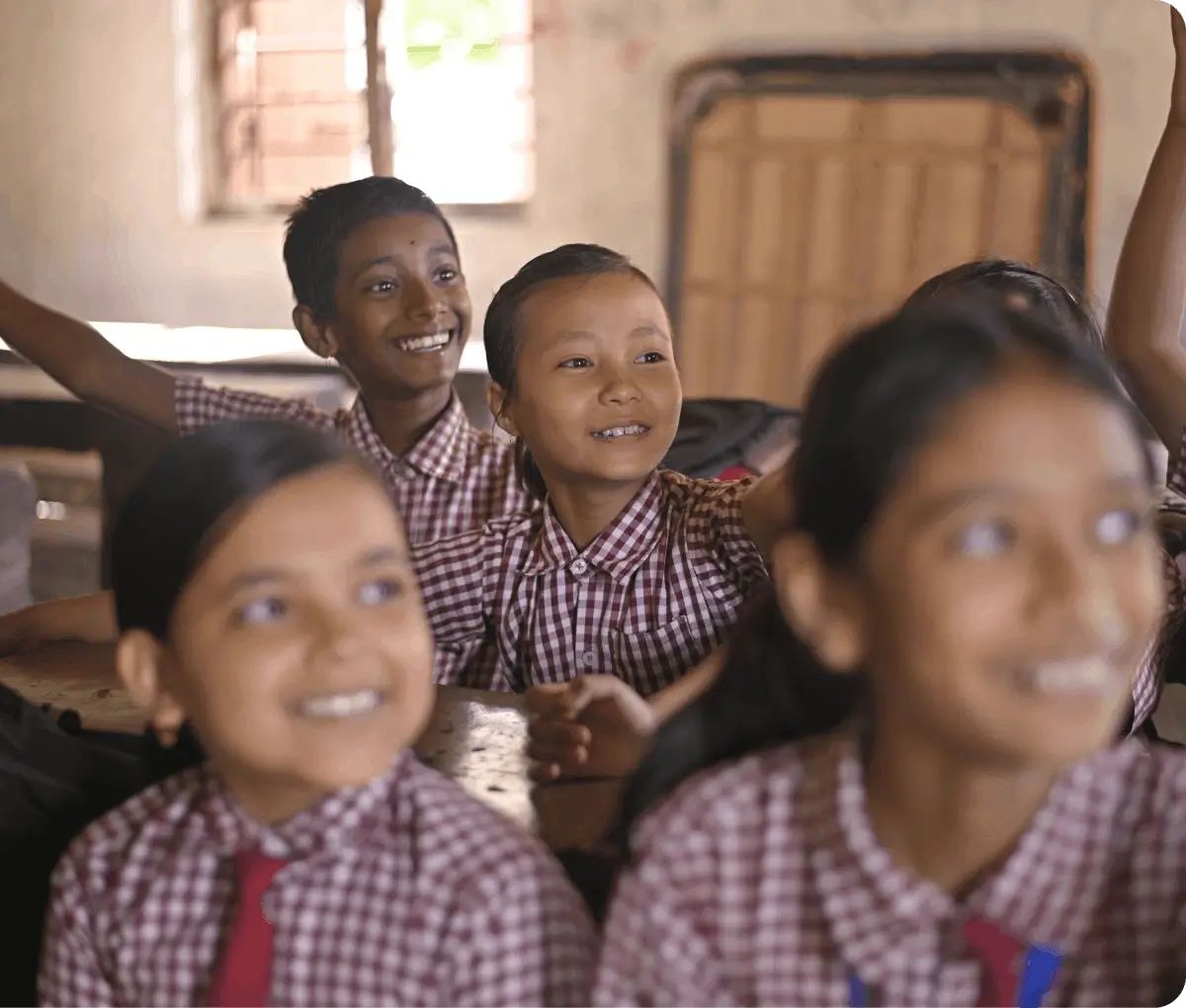
Across 2 years of the study, J-PAL conducted multiple random spot checks, which found:
87%
of children were actively listening
79%
of children were actively engaging
This was achieved at scale under routine government conditions and delivery; hence, we believe the program can be delivered at scale.
Can the program be delivered at scale?
Across 2 years of the study, J-PAL conducted multiple random spot checks, which found:
87%
of children were actively listening
79%
of children were actively engaging
This was achieved at scale under routine government conditions and delivery; hence, we believe the program can be delivered at scale.
Cost-effective for partners
J-PAL’s cost-effectiveness analysis shows that Labhya’s program costs less than 1% of what the government spends per child per year
Less than 1% of typical government education spending
No reliance on specialist staff or parallel delivery systems
Delivered using existing infrastructure
Designed for population-scale delivery inside real government budgets
To know more: